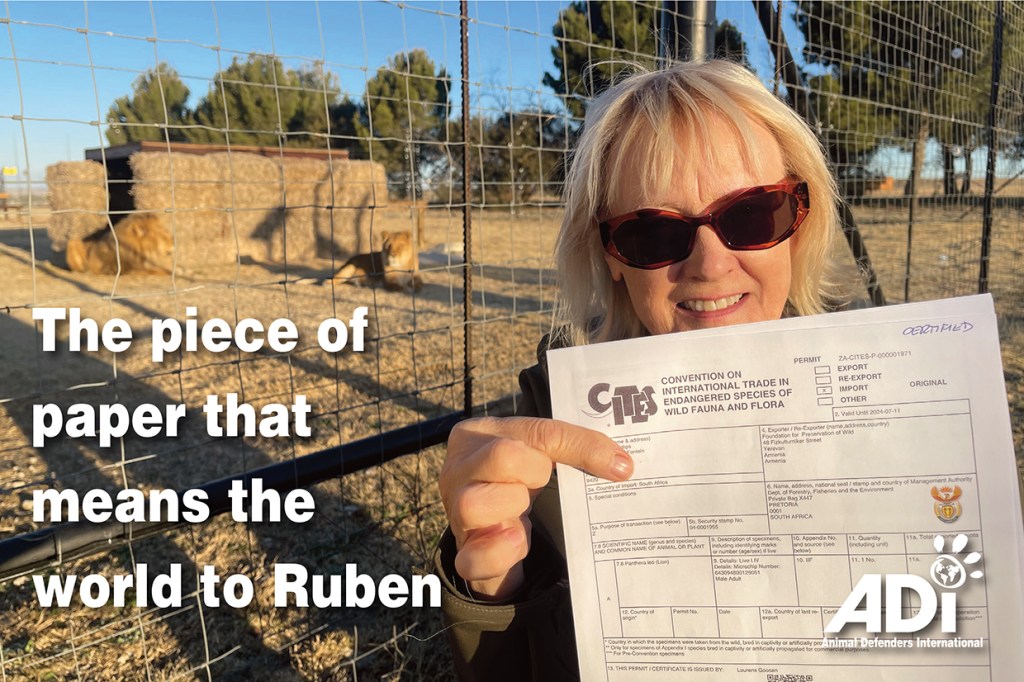
We cannot express how excited we were to receive Ruben’s import permit.
It may be an innocuous looking piece of paper, but it means the world to Ruben. We’re currently arranging his flight, and there are still a good few i’s to be dotted and t’s to be crossed, but the last legal obstacle is cleared.
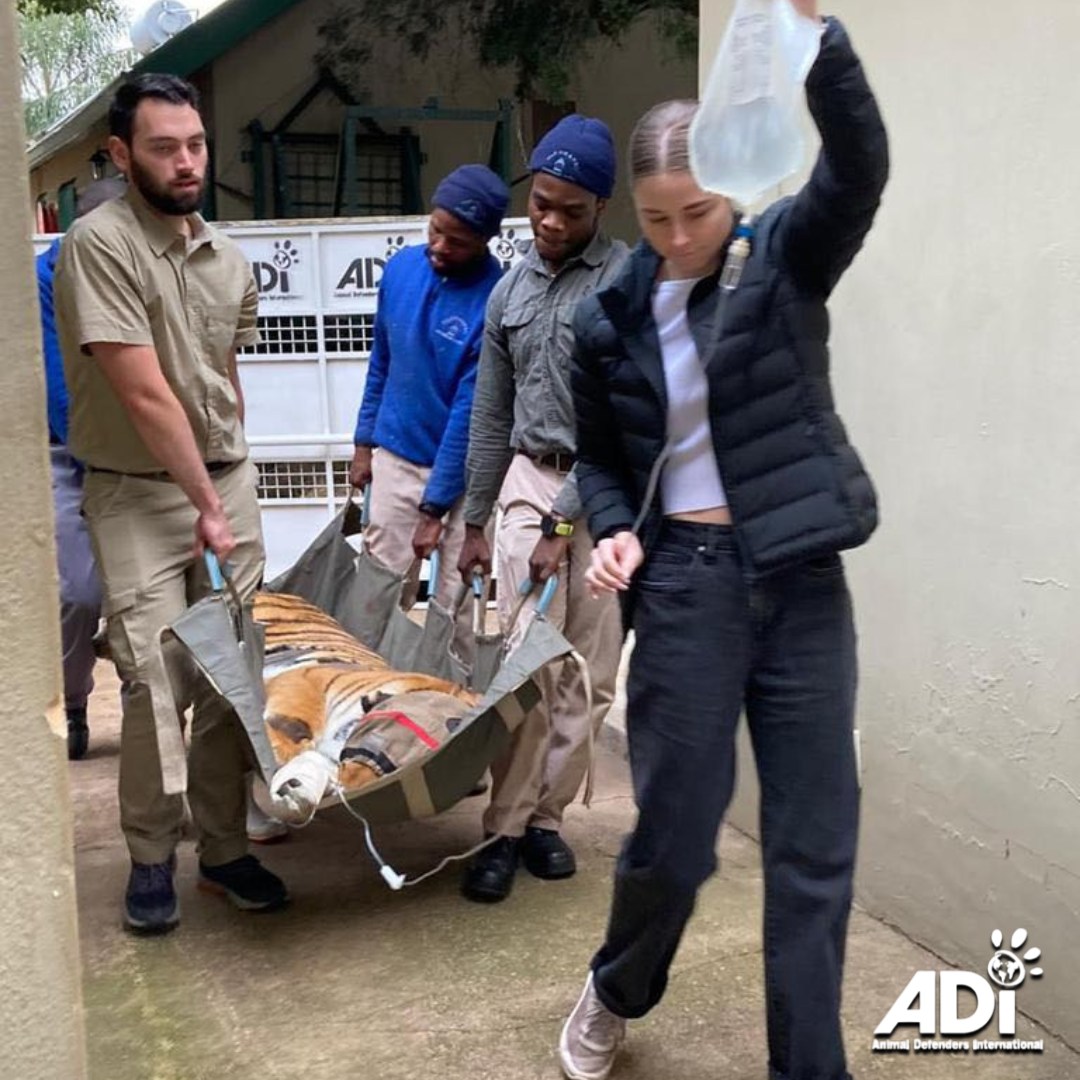
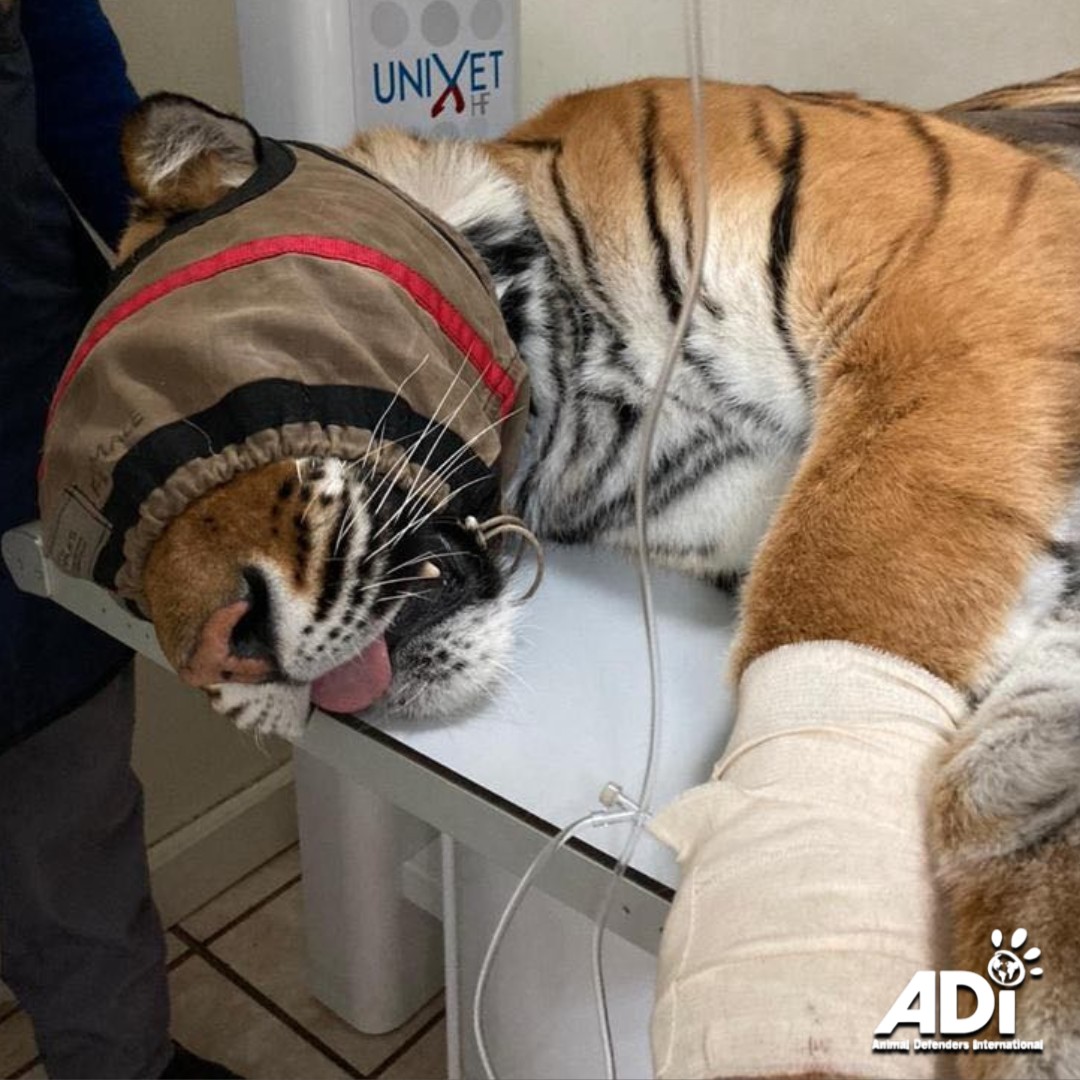
Max is recovering in hospital after being sedated for X-rays and an ultrasound. The good news is that his heart is fine and it does not appear to be cancer. He has some signs of tonsillitis and it is believed he has had feline allergic bronchitis or feline asthma. The X-rays are yet to be reviewed and Dr Caldwell will be keeping him in hospital for a week for observation. Max was weighed and came in at a handsome 159kg/350lbs.
Despite an initial improvement after medication, Max continues to have a chest infection, first identified when he began to wheeze during feeding. He is now at Old Chapel Veterinary Hospital where he will undergo tests to try to establish the cause. We are all hoping it will be an infection that can be dealt with and not anything more serious.
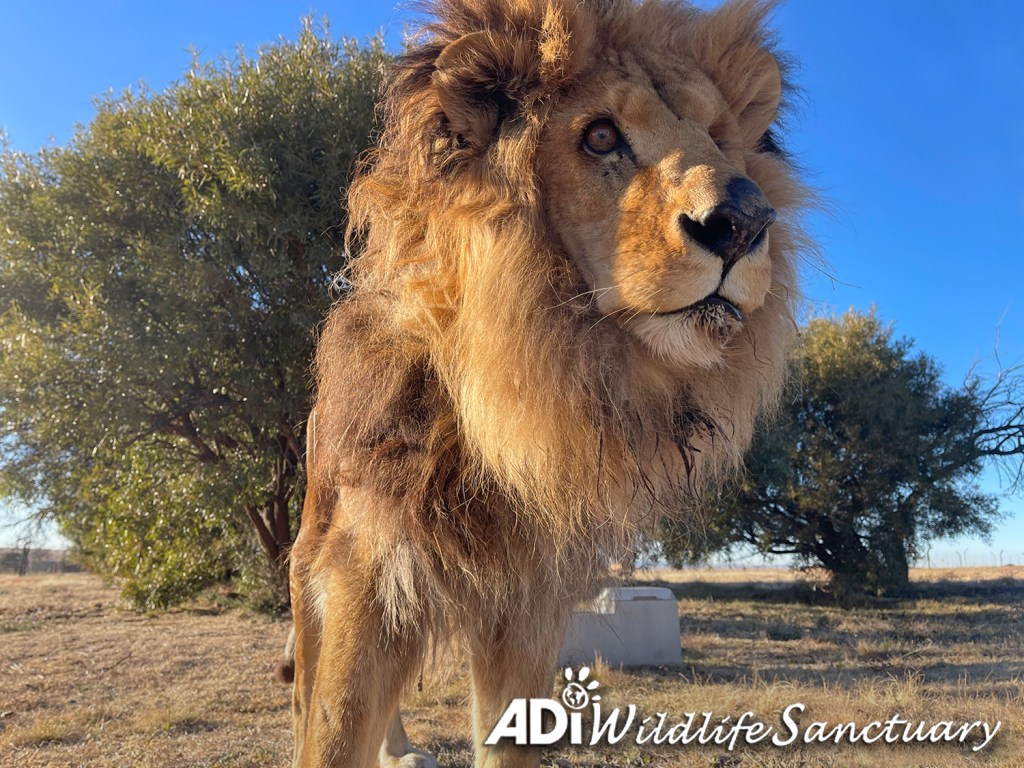
Leo on a crisp winter’s morning at the ADI Wildlife Sanctuary, South Africa. After one of the coldest nights of the year – Johannesburg has snow for the first time in a decade – Leo seemed none the worse for wear as he strolled out into Abbey Habitat. The 20-year old lion was rescued by ADI from a circus in Peru in 2014.
We are delighted that ADI has taken the giant step of converting our sanctuary to green energy as we work to fight climate change and to provide energy security for the rescued animals in our care. Almost 100 solar panels are powering all of the ADIWS operational areas, such as food preparation areas, offices, staff living quarters, freezers and more. Independent solar panels and energisers already power our lion and tiger habitat fences, motorized gates, security cameras etc.
Mighty Rey licking his lips! He was rescued from a circus in Cusco, Peru, as ADI enforced the country’s ban on wild animals in circuses. He crossed the Andes and then the world to come home to the ADI Wildlife Sanctuary in South Africa.
Diana Bell Miller and her Lion Lovers Facebook group committed to saving one of the lions during ADI’s Operation Spirit of Freedom (33 lions were saved), and chose Rey.
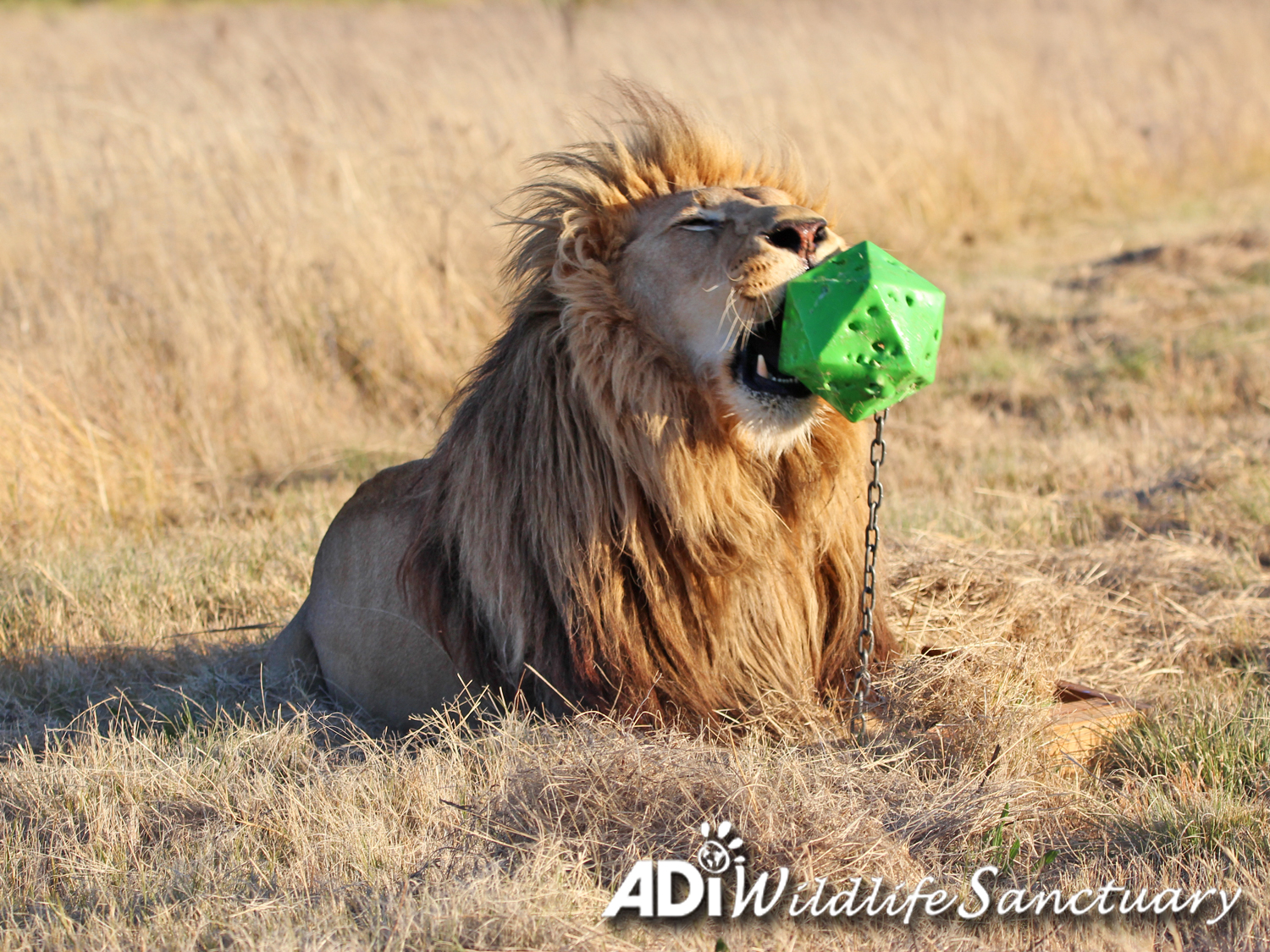
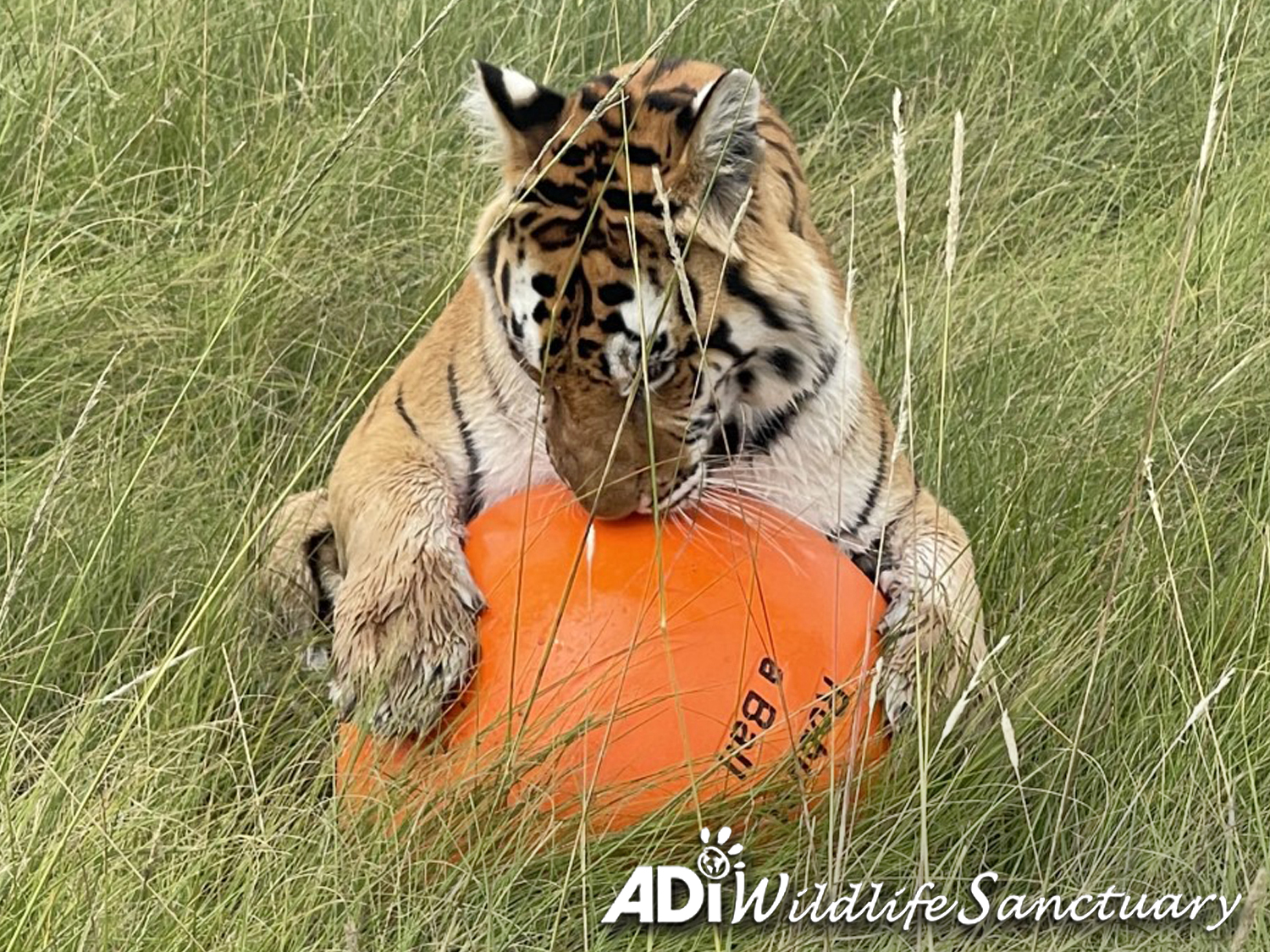
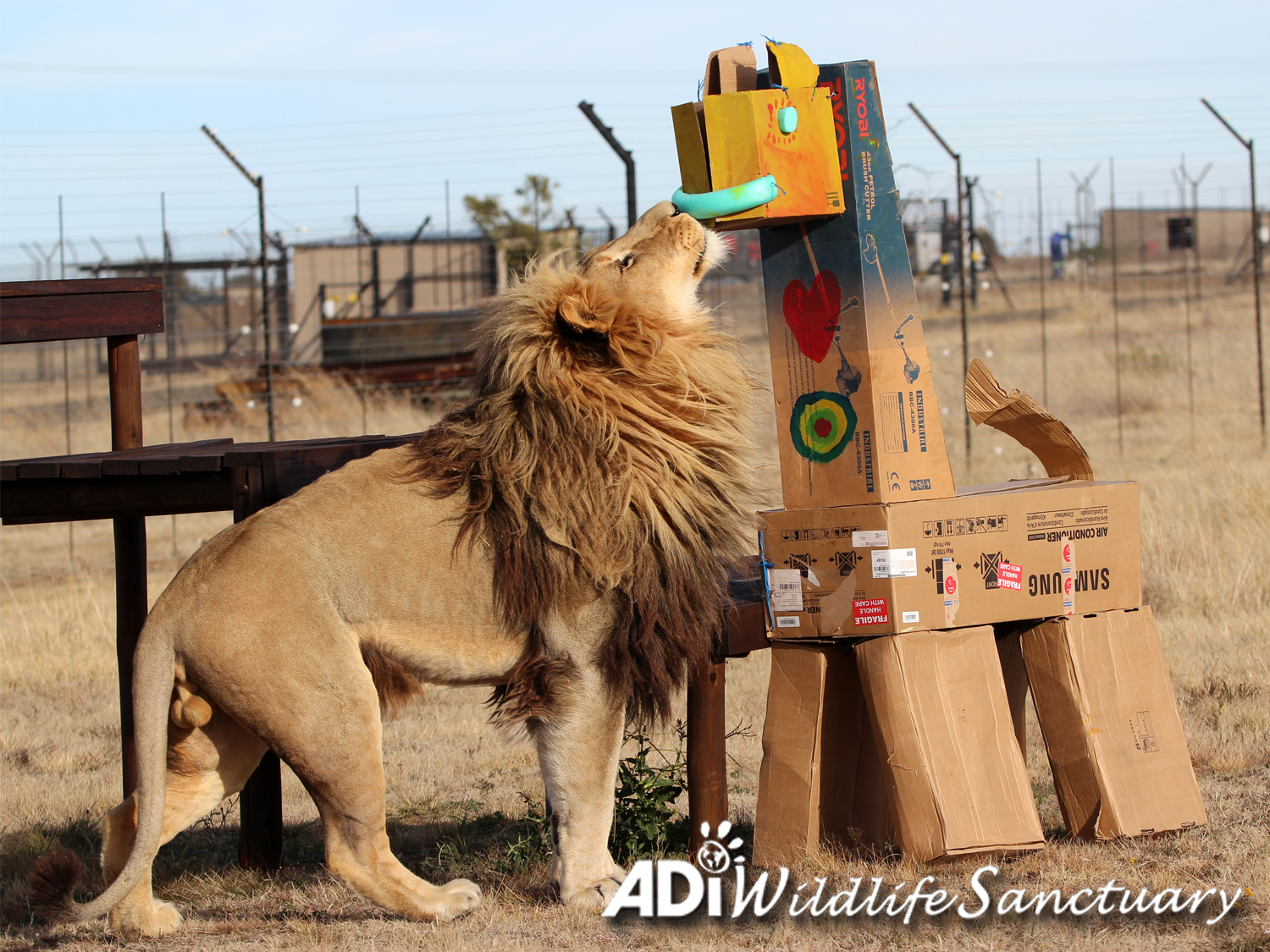
In many ways, big cats are much like oversized kittens. They certainly have a playful side and, as we’ve seen with our ADI Wildlife Sanctuary residents, they also enjoy toys, catnip and cardboard boxes, just like their very, VERY distant domestic cat cousins!
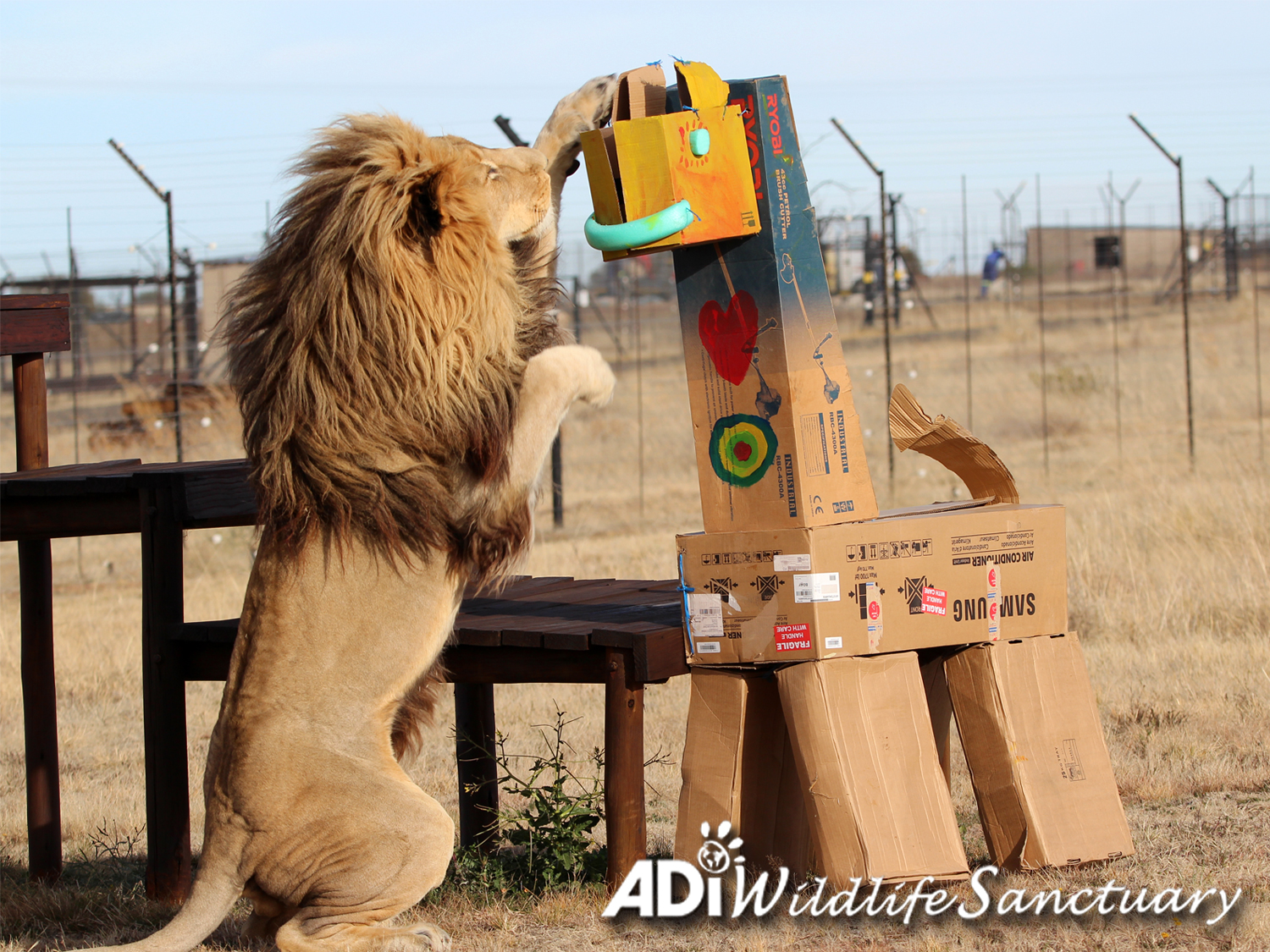
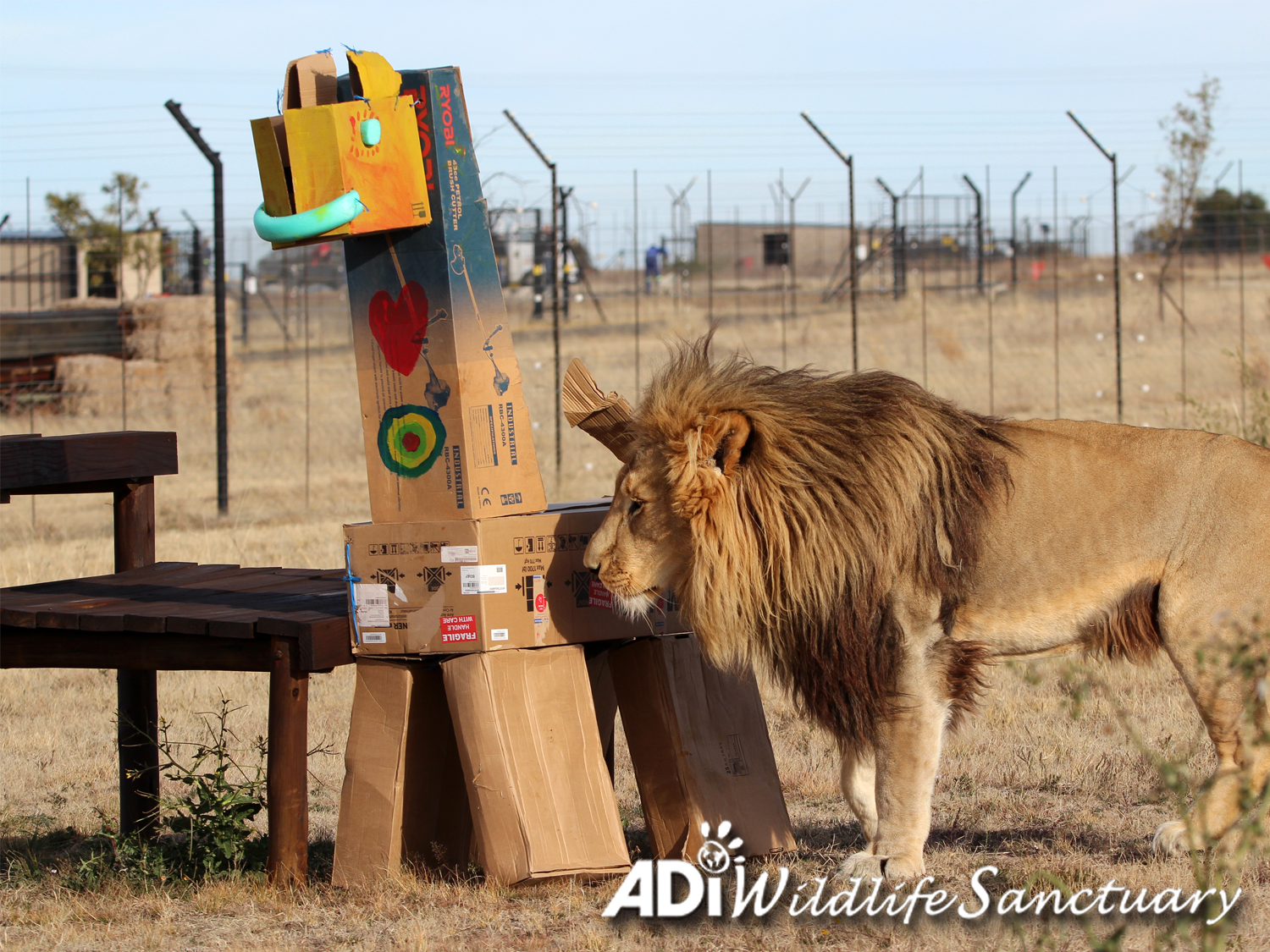
This cardboard giraffe was no match for mighty Kesari, who demolished the enrichment in about one minute, even though he relished every second of it. Thanks to Kunduchi Pet Products for donating catnip which is used on enrichment like this – all vital for keeping our big cats physically and mentally healthy.
To donate toward more enrichment, which Kesari and the others love: Donate UK £ | Donate US $
Tarzan is rarely seen without his devoted lioness, Tanya, by his side. They were rescued by ADI from a Guatemalan circus, where Tarzan had been attacked by a tiger who almost tore off his lower lip. These days, life is good for this warrior lion who is looking and feeling good too. Last year, our veterinary team gave him a partial lip lift to repair much of the damage.
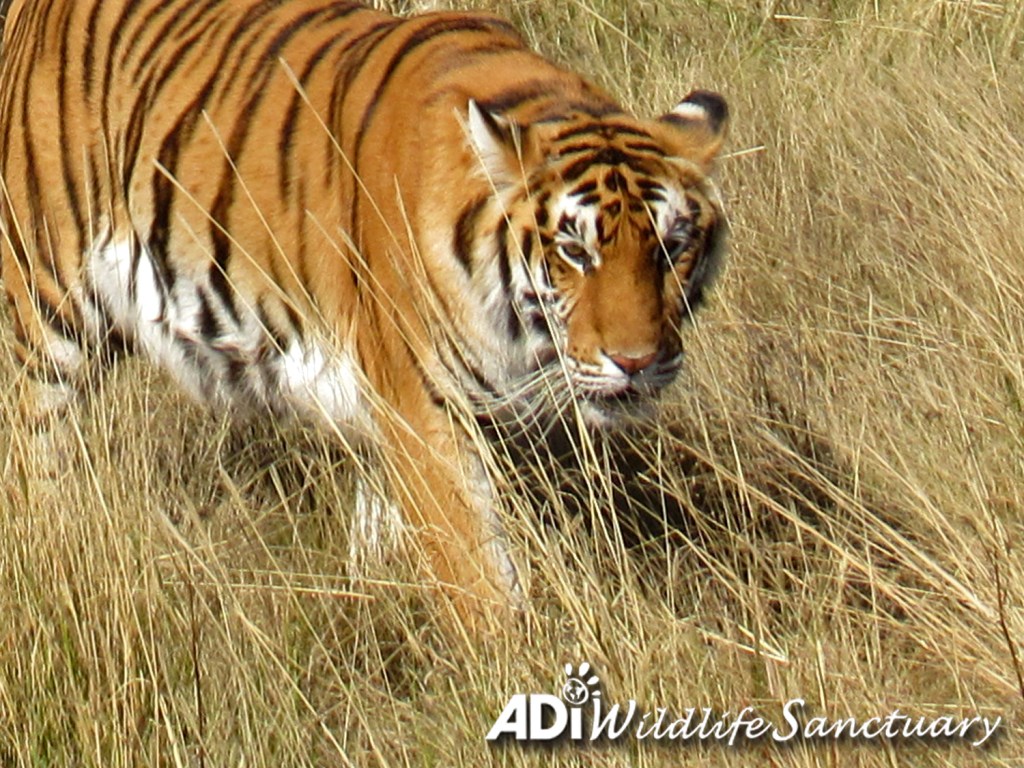
Lupe is a warrior princess. Like other members of her Guatemala tiger family we rescued who suffered multiple health issues due to circus life, Lupe also has seizures, for which she receives medication to keep them at bay.
Although Lupe and our other circus survivors are safe at the ADI Wildlife Sanctuary, the damage they endured in their previous lives can haunt them. In addition to inbreeding, poor nutrition in the circus results in nerve and spine malformations, which trigger seizures and damage the brain. That is why when we rescue an animal, we are committed to providing the very best, lifelong care. It costs $1,300 per month to care for a tiger or lion, so any help you can give truly makes a difference. Donate US $ | Donate UK £





 ADI Wildlife Sanctuary